How Argentina Learnt to Love Lionel Messi — From 'Mecci' to Farewell God
When Lionel Messi walks out at the Estadio Monumental for his 208th and final Argentina appearance, a love story that began with a misspelled fax will reach its last chapter. It took more than two decades of heartbreak for a nation to fully embrace the kid it once doubted.
They Didn't Even Know His Name
Argentina's greatest footballer almost slipped through the net before anyone knew who he was. When the country's football authorities finally came looking for the teenage prodigy lighting up Barcelona's La Masia academy, they did not even know his name. An AFA employee, Omar Souto, tracked down the Messi family in Spain through a Rosario telephone directory — and asked for "Leonardo". He was corrected on the spot: his name isn't Leonardo, it's Lionel, as recalled in the documentary "Messi: The Forgotten Tape".
The confusion extended to the paperwork. According to Argentine journalist and author Sergio Levinsky, who wrote "Messi and Everything Else", the AFA sent Barcelona a fax asking about a player called "Mecci" — spelling the surname with a double "c" because officials believed the Rosario boy might be of Italian origin. Meanwhile Spain, alive to what was developing at La Masia, was already trying to persuade the teenager to represent them instead.
Argentina's youth setup got a warning at the 2003 Under-17 World Cup in Finland, where Spain beat them 3-2 after extra time in the semi-finals. A young Cesc Fàbregas, who had scored twice and was Messi's teammate at Barcelona's academy, told the Argentine delegates afterwards: "You lost to us because we've got your best player at Barcelona and he's a genius." Argentina youth coach Hugo Tocalli recalled a similar encounter, saying Spain's head chef told him Argentina needed "a kid who plays in Barcelona" to win the tournament. The chase was on — for a player the country had barely heard of.
A Love Under Construction
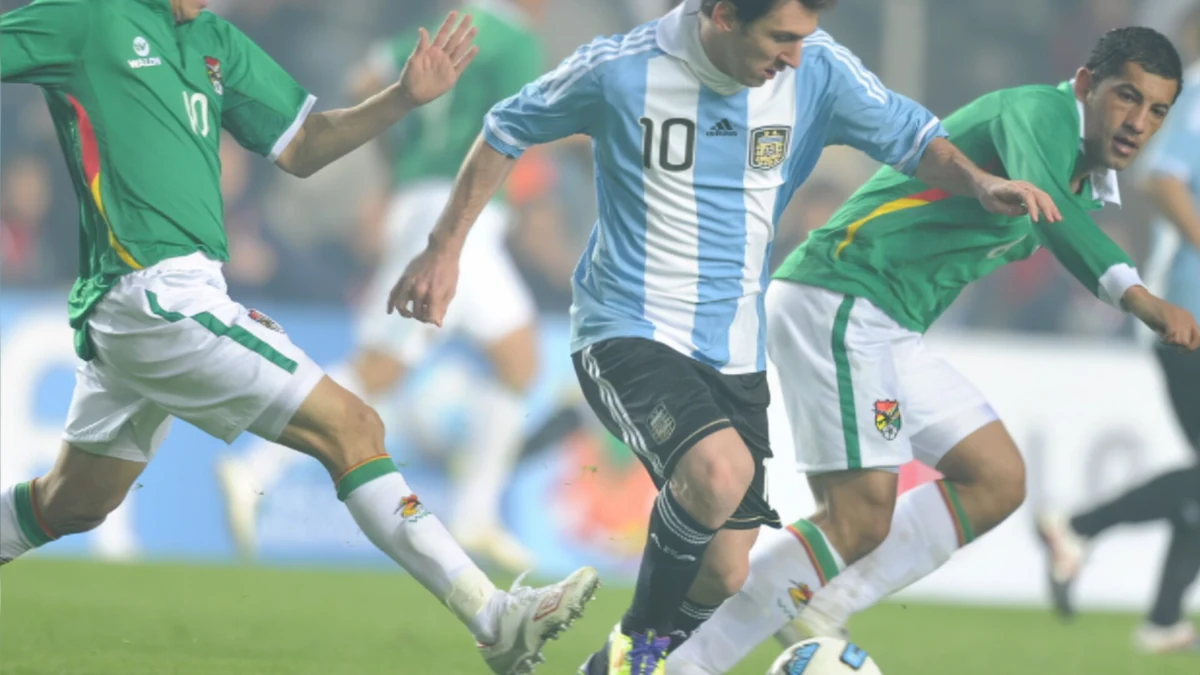
After those early complications, Messi played two under-20 friendlies for Argentina in 2004 — his first appearances in the blue and white stripes. Yet scepticism lingered. At the 2005 Under-20 World Cup in the Netherlands, the future greatest player in the world began the tournament on the bench as Argentina lost their opening game.
"There was strong resistance to calling up a kid who didn't play in the country," Levinsky told Reuters. "He had to fight against those early suspicions, against being considered a foreigner because he lived in Spain." Levinsky, who has chronicled Messi's career like few others, describes the relationship that followed as "a love under construction" — nothing like the instant adoration Argentina felt for Diego Maradona. "Messi was like suddenly finding out you have an 18-year-old son," he said. "You have to start loving him without having known he existed."
That suspicion hardened into something uglier during the years of near-misses. Messi was criticised for failing to reproduce his Barcelona form in an Argentina shirt and labelled "pecho frío" — cold-chested, lacking heart or fire — by some fans. The finals kept coming and kept slipping away: the 2007 Copa América final, the 2014 World Cup final against Germany, and penalty-shootout defeats to Chile in 2015 and 2016. For a nation that measures its heroes in trophies, the greatest club player on earth was becoming a symbol of international heartbreak.
The Colombia Night That Changed Everything
The first real crack in the wall of doubt appeared in difficult conditions during a World Cup qualifier against Colombia in 2011. Argentina rallied from a goal down to win, with Messi driving the comeback in what Levinsky remembers as a turning point. "He was exhausted, even vomiting, and he ended up winning," the journalist said. "It was the first time fans saw him differently."
For the first time, supporters saw not the Barcelona magician dropping in on international duty, but an Argentine captain suffering for the shirt the way they suffered in the stands. The image of Messi drained and still winning did more for his bond with the country than any highlight reel. It was the moment the love under construction started to look like something permanent.
2016: The Plea That Proved the Love
The bond was tested to breaking point after Argentina's penalty-shootout defeat by Chile in the 2016 Copa América final. A devastated Messi announced his international retirement, declaring that the national team was over for him. It could have been the moment Argentina turned on its brightest star.
Instead, the country did the opposite. Rather than blame him, millions of Argentines pleaded publicly for his return — marches, banners, open letters from a nation that had finally understood what it stood to lose. "People realised he was not responsible for the defeats," Levinsky said. "He was the one getting them to finals." Messi came back a month later, and the relationship was never the same. The fan who had been doubted was now the player the country begged to keep.
Glory Under Scaloni
Under Lionel Scaloni, everything changed. Messi became the undisputed leader of a new generation — no longer the quiet genius orbiting the team, but its outspoken captain and emotional centre. He guided Argentina to the 2021 Copa América at the Maracanã, ending a 28-year senior trophy drought, then to the 2022 World Cup in Qatar, and then defended the continental crown at the 2024 Copa América.
He departs the international game as Argentina's record goalscorer and all-time appearance holder, with 125 goals in 207 appearances — including 21 goals in 34 World Cup matches, seven of them in the triumphant 2022 campaign. The boy once benched at the Under-20 World Cup retires having completed football: a World Cup, two Copa Américas, a Finalissima and an Olympic gold.
Messi and Maradona
Messi's evolution into a more vocal captain inevitably drew comparisons with Diego Maradona, but Levinsky says the usual debate between Argentina's two biggest icons misses the point. "It is Messi and Maradona," he said. "They were both geniuses in different eras."
The distinction matters. Maradona was loved instantly, volcanically. Messi's affection had to be earned over time, built through suffering and shared heartbreak before it could be sealed in glory. "For Levinsky, Argentina's affection for Messi was not as immediate as it was for Maradona," the Reuters account notes. "It developed around a player whose upbringing and career unfolded largely abroad but who grew closer to supporters over time." That is why tonight's farewell carries a weight no ordinary friendly could: it closes the book on a love story that was hard-won, and is therefore loved all the more.
The Last Chapter at the Monumental
And so the circle closes where so much of the story was written. Tonight, against Benin at the Estadio Monumental — a ground where Messi has played 28 times in an Argentina shirt — he will make his 208th and final senior appearance. Tickets reportedly sold out in less than two hours. Members of the 2022 World Cup-winning squad have been invited back with their families. The AFA has branded the night "El Último Tango".
When the fax went to Barcelona all those years ago, it asked about a player called "Mecci" whom Argentina barely knew. Tonight the whole country knows his name. He retires, in the words of the tributes pouring in from around the world, a god — but more than that, he retires finally, completely, loved.
Questions people ask
When is Messi's last match for Argentina?
The farewell friendly between Argentina and Benin kicks off at 8pm local time on Tuesday 6 October 2026 at the Estadio Monumental in Buenos Aires — 7pm ET, midnight in the UK and 4:30am IST on Wednesday in India.
How many goals and caps does Messi have for Argentina?
Lionel Messi leaves the international game as Argentina's record goalscorer and record appearance holder, with 125 goals in 207 appearances, including 21 goals in 34 World Cup matches.
Why was Messi once called 'pecho frío'?
For years some Argentine fans called Messi 'pecho frío' — cold-chested — claiming he reserved his best for Barcelona. That scepticism finally melted after the 2021 Copa América and the 2022 World Cup, when he led Argentina to glory as captain.
Why did Messi briefly retire from Argentina in 2016?
After the penalty-shootout defeat to Chile in the 2016 Copa América final, a devastated Messi announced a brief international retirement. Rather than blame him, millions of Argentines pleaded publicly for his return — and he came back a month later.
What did the AFA's famous fax to Barcelona say?
According to journalist Sergio Levinsky, the Argentine Football Association faxed Barcelona asking about a player called 'Mecci' — spelling the surname with a double 'c' because officials believed the Rosario teenager might be Italian.
Follow Argentina vs Benin Live on matchday with our live score.