Reuters: Messi's Farewell Closes a Hard-Won Love Story
The AFA once faxed Barcelona asking about a player called 'Mecci.' On Tuesday night, 85,000 people will fill the Monumental to say goodbye to him. Reuters traces the 21-year love story in between.
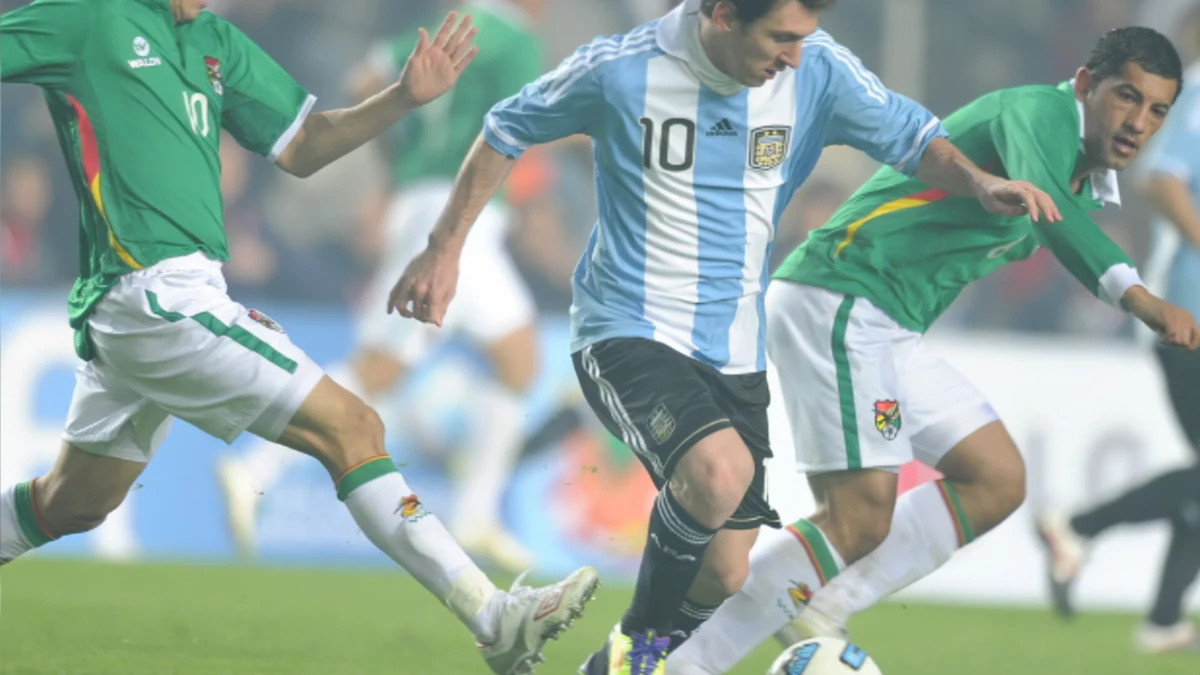
A boy the federation couldn't name
Few love stories begin with the beloved going unrecognized. At the 2003 U-17 World Cup in Finland, Spain beat Argentina 3-2 after extra time in the semi-final — and Cesc Fàbregas, who scored twice that day and was Messi's La Masia teammate, told the Argentine delegates afterward that they had lost because Spain fielded 'your best player at Barcelona.' As journalist Sergio Levinsky recounted to Reuters this week, AFA employee Omar Souto tracked the family through a Rosario phone directory and asked for 'Leonardo' — before being told, as the documentary 'Messi: The Forgotten Tape' recounts, that his name wasn't Leonardo, it was Lionel. The federation then faxed Barcelona asking about a player spelled 'Mecci,' double-c, under the impression he might be Italian. Argentina youth coach Hugo Tocalli, for his part, told last month's Olé Summit that Spain's head chef had told him Argentina needed 'a kid who plays in Barcelona' to win the tournament.
It took two U-20 friendlies in 2004, a benching at the 2005 U-20 World Cup in the Netherlands, and years of suspicion before the relationship truly began. Messi was treated as a foreigner, a kid who had not played in the country. When his Barcelona genius failed to transfer to the national team, the cruellest label in Argentine football was applied: 'pecho frio' — cold chest, lacking heart.
'Messi was like suddenly finding out you have an 18-year-old son,' Levinsky told Reuters. 'You have to start loving him without having known he existed. It was a love under construction.'
Colombia 2011: the first crack in the ice
The first turning point came in a World Cup qualifier against Colombia in 2011. In brutal conditions, Messi helped Argentina rally from a goal down — exhausted, vomiting, winning almost alone. 'He was exhausted, even vomiting, and he ended up winning,' Levinsky recalled. 'It was the first time fans saw him differently.'
The adoration was still conditional, though. Four finals were lost — the 2014 World Cup final to Germany in extra time, the Copa América finals of 2015 and 2016. Messi had five Ballon d'Ors before turning 29, eight Liga titles and four Champions Leagues with Barcelona, yet zero senior trophies with Argentina. The old accusations ran deep: that he cared more about Barcelona, that his stoicism meant he was going through the motions, that he lacked Maradona's fire — even, incredibly, that he did not sing the national anthem with enough passion.
2016: the retirement that changed everything
After missing in the penalty shootout defeat to Chile in the 2016 Copa América final, Messi announced his international retirement: 'The national team is over for me,' he said that June, adding 'it is evident that this is not for me.' What followed was not the expected wave of blame but something remarkable — a country pleading publicly for his return.
'People realised he was not responsible for the defeats,' Levinsky told Reuters. 'He was the one getting them to finals.' Two months later, Messi was back. In the decade after that return, he would score 70 goals in 91 appearances — and finally, the trophies came: the 2021 Copa América at the Maracana against Brazil, the 2022 World Cup in Qatar with seven tournament goals including two in the final against France, and the 2024 Copa América. The shy teenager who had left Rosario for Barcelona at 13 had become, in Reuters' phrase, the unquestioned leader — a captain whose outspokenness drew comparisons with Maradona himself. 'It is Messi and Maradona,' Levinsky said. 'They were both geniuses in different eras.'
The farewell he chose
Messi announced his international retirement on August 31, ending months of speculation. His handwritten farewell statement carried the weight of every old accusation: 'I swear to you that I always gave my all — not just in recent years. Years when we won everything, but before that too — and I always fought hard and gave my all for this shirt, to bring you joy and make you feel proud to be Argentine through football.' It closed with the line he has repeated all week: 'I love, have loved and will always love being a part of the national team.'
He chose the terms of his exit with unusual precision. Messi skipped Argentina's other October friendlies — the 4-0 win over Bolivia and the 7-0 demolition of Burkina Faso — to arrive fresh, landing in Rosario on Friday morning on a private jet from Fort Lauderdale with Antonela, their three sons and his mother Celia. He was included in Scaloni's squad specifically for the farewell. Scaloni, whose contract expires at year's end and who admitted 'it will be hard not to cry that day,' said the friendly exists to let Messi 'say goodbye the way he wants to.' FIFA itself describes Tuesday as his final Argentina appearance.
A stadium holds its breath
The details of the night keep accumulating. Tickets sold out in under two hours via Deportick on September 24, with one upper-stand seat listed at 320,000 pesos. Adidas unveiled a farewell collection on September 25 — a shirt reinterpreting the Argentine flag with the Sun of May across front and back, gold detailing, Messi's own signature logo replacing the adidas mark, and a commemorative No. 10 framed by laurel branches. AFA president Claudio Tapia confirmed the entire 2022 World Cup-winning squad and their families were invited to attend.
His final numbers will read: 207 caps, 125 goals, 68 assists — Argentina's all-time top scorer and most-capped player, eight Ballon d'Ors, the 2008 Olympic gold, the 2022 Finalissima, two Copas and a World Cup. On Tuesday the 208th cap arrives, and with it the end of what Reuters calls one of the most enduring relationships in sporting history: from the boy the federation could not spell, through the boos and the 'pecho frio' years, to a farewell that — in Scaloni's words — would fill five stadiums if there were five.
No fairytale ending — and it doesn't matter
Reuters' August retrospective made one point plainly: there was no fairytale ending. The 2026 World Cup, Messi's last, ended with a final defeat to Spain on July 19 — denying him the second world title that would have closed the story perfectly. He played all eight matches of that tournament and scored eight goals, carrying a transitioning Argentina side further than most expected, but the trophy went to the European champions.
Yet the farewell week suggests the ending never needed the trophy. The sellout in under two hours, the gold jersey, the returning world champions, the private jet to Rosario — none of it was arranged to celebrate a 2026 title. It was arranged to celebrate the relationship itself: the player who, in his own words this week, 'always fought hard and gave my all for this shirt.' A love story twenty-one years under construction does not need a final chapter written by a final; the stadium on Tuesday will supply its own ending.
A double farewell on Tuesday
Tuesday night will not belong to Messi alone. Nicolás Otamendi, his vice-captain across Argentina's golden era, was recalled specifically for the Benin friendly — a second farewell folded into the same evening. Otamendi retired from international football in July after the World Cup final defeat to Spain, closing a 17-year, 139-cap career that took in the 2022 World Cup, the 2021 and 2024 Copas América and the 2022 Finalissima, and he has since joined River Plate.
'Fate decreed that my final match would be a World Cup final,' he wrote in his farewell message. 'Whilst titles go down in history, the love for these colours lasts a lifetime.' The AFA's decision to bring him back for one night means the Monumental will say goodbye to two champions at once — the captain who built the era, and the defender who guarded it. For the love story Reuters traced this week, it is a fitting final symmetry: the farewell that honours the whole generation, not just its genius.
Questions people ask
Did the AFA really not know Messi's name?
Journalist Sergio Levinsky recalled that at the 2003 U-17 World Cup, the AFA barely knew Messi's name — one official asked for 'Leonardo,' and the federation faxed Barcelona asking about a player spelled 'Mecci,' double-c, believing he might be Italian.
What was the first turning point with Argentina fans?
The 2011 World Cup qualifier against Colombia, when Messi rallied Argentina from a goal down while exhausted and vomiting. Levinsky told Reuters: 'It was the first time fans saw him differently.'
Why did Messi retire from Argentina in 2016?
After the 2016 Copa América final defeat to Chile, Messi briefly retired, saying 'the national team is over for me.' Public pleas — not blame — followed, and he returned two months later. Levinsky: 'People realised he was not responsible for the defeats. He was the one getting them to finals.'
What did Messi win with Argentina?
Under Lionel Scaloni: the 2021 Copa América (beating Brazil at the Maracana), the 2022 World Cup in Qatar (7 goals, twice in the final against France), and the 2024 Copa América.
What is planned for the farewell?
Tuesday's friendly against Benin at the Monumental will be his 208th and final cap. Tickets sold out in under two hours on September 24, adidas unveiled a commemorative farewell collection on sale from September 25, and the whole 2022 World Cup-winning squad was invited to attend. Nicolás Otamendi was also recalled for a farewell of his own on the same night, after retiring with 139 caps in July.
What are Messi's final Argentina numbers?
207 caps, 125 goals, 68 assists — Argentina's all-time top scorer and most-capped player, eight Ballon d'Ors, plus the 2008 Olympic gold and 2022 Finalissima.
All of our farewell coverage is on Argentina vs Benin.